Tuesday, July 9, 2019

Staying Hydrated - Staying Healthy-Not just for athletes or exercise.

  Staying Hydrated - Staying Healthy

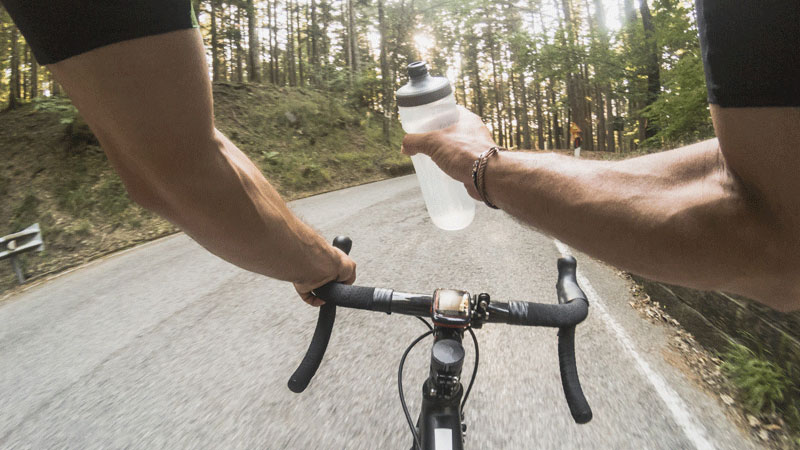
cyclist view drinking from water bottle
When the temperatures rise, getting enough to drink is important whether you’re playing sports, traveling or just sitting in the sun.

And it’s critical for your heart health.
Keeping the body hydrated helps the heart more easily pump blood through the blood vessels to the muscles. And, it helps the muscles work efficiently.

“If you’re well hydrated, your heart doesn’t have to work as hard,” said John Batson, M.D, a sports medicine physician with Lowcountry Spine & Sport in Hilton Head Island, S.C., and an American Heart Association volunteer.

Dehydration can be a serious condition that can lead to problems ranging from swollen feet or a headache to life-threatening illnesses such as heat stroke.

How much water do you need?

What does being well hydrated mean? The amount of water a person needs depends on climatic conditions, clothing worn and exercise intensity and duration, Batson said.

A person who perspires heavily will need to drink more than someone who doesn’t. Certain medical conditions, such as diabetes or heart disease, may also mean you need to drink more water. People with cystic fibrosis have high concentrations of sodium in their sweat and also need to use caution to avoid dehydration. And some medications can act as diuretics, causing the body to lose more fluid.

Thirst isn’t the best indicator that you need to drink. “If you get thirsty, you’re already dehydrated,” Batson said.

Batson said the easiest thing to do is pay attention to the color of your urine. Pale and clear means you’re well hydrated. If it’s dark, drink more fluids.

If you want to know exactly how much fluid you need, Batson recommends weighing yourself before and after exercise, to see how much you’ve lost through perspiration. It’s a particular good guide for athletes training in the hot summer months.

“For every pound of sweat you lose, that’s a pint of water you’ll need to replenish,” Batson said, adding that it’s not unusual for a high school football player, wearing pads and running through drills, to lose 5 pounds or more of sweat during a summer practice.

Not sweating during vigorous physical activity can be a red flag that you’re dehydrated to the point of developing heat exhaustion.

Water is best.

For most people, water is the best thing to drink to stay hydrated. Sources of water also include foods, such fruits and vegetables which contain a high percentage of water. Sports drinks with electrolytes, may be useful for people doing high intensity, vigorous exercise in very hot weather, though they tend to be high in added sugars and calories.

“It’s healthier to drink water while you’re exercising, and then when you’re done, eat a healthy snack like orange slices, bananas or a small handful of unsalted nuts ,” Batson said.

He cautioned against fruit juices or sugary drinks, such as soda. “They can be hard on your stomach if you’re dehydrated,” he said.

It’s also best to avoid drinks containing caffeine, which acts as a diuretic and causes you to lose more fluids.

Batson says drinking water before you exercise or go out into the sun is an important first step.

“Drinking water before is much more important,” he said. “Otherwise, you’re playing catch-up and your heart is straining.”

Not just for athletes or exercise.

Hydration isn’t just important during physical activity. Sitting in the sun on a hot or humid day, even if you aren’t exercising, can also cause your body to need more fluids. 
People who have a heart condition, are older than 50 or overweight may also have to take extra precautions.

It’s also a good thing to keep tabs on your hydration if you’re traveling.

“You might sweat differently if you’re in a different climate,” Batson said.

Peripartum cardiomyopathy (PPCM), also known as postpartum cardiomyopathy, is an uncommon form of heart failure that happens during the last month of pregnancy or up to five months after giving birth. Cardiomyopathy literally means heart muscle disease.


pregnant woman lying in bed

Peripartum Cardiomyopathy (PPCM)

What is peripartum cardiomyopathy?

Peripartum cardiomyopathy (PPCM), also known as postpartum cardiomyopathy, is an uncommon form of heart failure that happens during the last month of pregnancy or up to five months after giving birth. Cardiomyopathy literally means heart muscle disease.
PPCM is a dilated form of the condition, which means the heart chambers enlarge and the muscle weakens. This causes a decrease in the percentage of blood ejected from the left ventricle of the heart with each contraction. That leads to less blood flow and the heart is no longer able to meet the demands of the body's organs for oxygen, affecting the lungs, liver, and other body systems.
PPCM is rare in the United States, Canada, and Europe. About 1,000 to 1,300 women develop the condition in the U.S. each year. In some countries, PPCM is much more common and may be related to differences in diet, lifestyle, other medical conditions or genetics.

How is it diagnosed?

PPCM may be difficult to detect because symptoms of heart failure can mimic those of third trimester pregnancy, such as swelling in the feet and legs, and some shortness of breath. More extreme cases feature severe shortness of breath and prolonged swelling after delivery.
During a physical exam, doctors will look for signs of fluid in the lungs. A stethoscope will be used to listen for lung crackles, a rapid heart rate, or abnormal heart sounds. An echocardiogram can detect the cardiomyopathy by showing the diminished functioning of the heart.
PPCM is diagnosed when the following three criteria are met:
  1. Heart failure develops in the last month of pregnancy or within 5 months of delivery.
  2. Heart pumping function is reduced, with an ejection fraction (EF) less than 45% (typically measured by an echocardiogram). EF is how much blood the left ventricle pumps out with each contraction. A normal EF can be between 55 and 70.
  3. No other cause for heart failure with reduced EF can be found.
Laboratory blood tests are a standard part of the evaluation. This includes tests to assess kidney, liver and thyroid function; tests to assess electrolytes, including sodium and potassium; and a complete blood count to look for anemia or evidence of infection. In addition, markers of cardiac injury and stress can be used to assess level of risk.

Symptoms of the condition include:

  • Fatigue
  • Feeling of heart racing or skipping beats (palpitations)
  • Increased nighttime urination (nocturia)
  • Shortness of breath with activity and when lying flat
  • Swelling of the ankles
  • Swollen neck veins
  • Low blood pressure, or it may drop when standing up.
The severity of symptoms in patients with PPCM can be classified by the New York Heart Association system:
  • Class I - Disease with no symptoms
  • Class II - Mild symptoms/effect on function or symptoms only with extreme exertion
  • Class III - Symptoms with minimal exertion
  • Class IV - Symptoms at rest

What are the causes?

The underlying cause is unclear. Heart biopsies in some cases show women have inflammation in the heart muscle. This may be because of prior viral illness or abnormal immune response. Other potential causes include poor nutrition, coronary artery spasm, small-vessel disease, and defective antioxidant defenses. Genetics may also play a role.
Initially thought to be more common in women older than 30, PPCM has since been reported across a wide range of age groups. Risk factors include:
  • Obesity
  • History of cardiac disorders, such as myocarditis (inflammation of the heart muscle)
  • Use of certain medications
  • Smoking
  • Alcoholism
  • Multiple pregnancies
  • African-American descent
  • Poor nourishment

How can PPCM be treated?

The objective of peripartum cardiomyopathy treatment is to keep extra fluid from collecting in the lungs and to help the heart recover as fully as possible. Many women recover normal heart function or stabilize on medicines. Some progress to severe heart failure requiring mechanical support or heart transplantation.
There are several classes of medications a physician can prescribe to treat symptoms, with variations that are safer for women who are breastfeeding.
  • Angiotensin converting enzyme, or ACE, inhibitors – Help the heart work more efficiently
  • Beta blockers – Cause the heart to beat more slowly so it has recovery time
  • Diuretics – Reduce fluid retention
  • Digitalis – Derived from the foxglove plant, it has been used for more than 200 years to treat heart failure. Digitalis strengthens the pumping ability of the heart
  • Anticoagulants – To help thin the blood. Patients with PPCM are at increased risk of developing blood clots, especially if the EF is very low.
Doctors may recommend a low-salt diet, fluid restrictions, or daily weighing. A weight gain of 3 to 4 pounds or more over a day or two may signal a fluid buildup.
Women who smoke and drink alcohol will be advised to stop, since these habits may make the symptoms worse.
A heart biopsy may help determine if the underlying cause of cardiomyopathy is a heart muscle infection (myocarditis). However, this procedure is uncommon.

How can women minimize their risk?

To develop and maintain a strong heart, women should avoid cigarettes and alcohol, eat a well-balanced diet and get regular exercise. Women who develop peripartum cardiomyopathy are at high risk of developing the same condition with future pregnancies.

What’s next?

Investigations are underway to understand the cause of PPCM and to develop new treatments. Treatments that alter the immune system such as intravenous γ-globulin and immunoabsorption have been tried but are not proven. Investigators also have focused on the role of prolactin in PPCM. Prolactin is a hormone released from the pituitary gland late in pregnancy and after delivery that stimulates breast milk production. Prolactin, however, may have adverse effects on the heart muscle by limiting its blood supply and causing cell death. Bromocryptine is a medication that inhibits the pituitary secretion of prolactin. Early studies suggest it helps treat PPCM, but more research is needed.
A Rough Pregnancy - Read Rebecca Stewart's PPCM story featured in Heart Insight Magazine.

Healthy living is a journey, and you don't have to take it alone. Join #GoRedGetFit

Image may contain: 3 people    Healthy living is a journey, and you don't have to take it alone. Join #GoRedGetFit for motivation, support from women just like you. Start here:http://spr.ly/6182Esvbs

Grilling can be one of the healthiest ways to cook, if you follow these tips. What's on your #JulySummer menu?

Top Ten Tips for Healthy Grilling and Barbecuing

top 10 tips for healthy grilling and barbecuing
Grilling is a fun and flavorful way to cook no matter the season – even if it’s cold outside! Who doesn’t love to cook together with friends outdoors in the summer and tailgate at the games during the fall and winter?
The best part is that grilling can be one of the healthiest ways to cook! Just follow our top ten tips for healthy grilling and barbecuing.
  1. Pick the perfect protein.
    Fish, skinless chicken breast and lean ground poultry are all healthier choices. The good fats in fish like salmon and trout actually have health benefits. And when you grill with skill, your guests won’t even miss the red meat, which usually has more saturated fat. Wrap marinated fish fillets in foil, construct colorful chicken kebabs, or make more savory turkey burgers by mixing minced portabella mushrooms and onions into the patties. If you do choose meat or pork, get “loin” or “round” cuts and “choice” or “select” grades of beef instead of “prime.”
  2. Rightsize your portions.
    A healthy portion of any type of meat is about 3 ounces, or the size of a deck of cards, and definitely no more than 6 ounces. If that sounds small, just remember all the delicious grilled veggies and side dishes that will be keeping it company on your plate!
  3. Give it a soak or rub.
    We’re not talking about a spa day! Marinating or rubbing spices on poultry, fish and meat can add amazing flavor with the bonus of being able to use less salt. All you need is about ½ cup of marinade or 1 tablespoon of spice rub for each pound of food. Try this simple marinade recipe and find others in our recipe center. Make a simple rub of your favorite spice (such as allspice, chili powder, cinnamon, cumin, garlic powder, paprika or rosemary) and black pepper. Safety tip: never reuse marinade or rub after raw meat has touched it.
  4. Add color – lots of color.
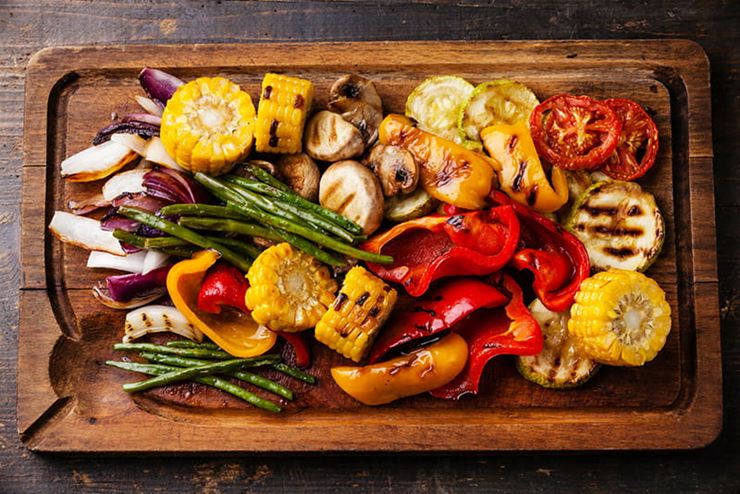
    Just about all your favorite colorful fruits and veggies can be grilled, alone or in kebabs, giving them delicious flavor that might win over even the most committed carnivore. The trick is to cut them into pieces that will cook quickly and evenly. Brush with a healthy oil to prevent sticking or use a grill basket to keep them out of the line of fire. Some favorites include asparagus, avocado, bell peppers, corn, eggplant, mushrooms, onions, potatoes, squash and zucchini.
  5. Say bye to the bad fat.
    Buy skinless poultry or remove the skin before cooking. Trim away any visible fat on meat. Brush or marinate foods with a healthy cooking oil. And let ‘er drip – make sure fat drips away from the food while it cooks.
  6. Let the simple grilled goodness shine through.
    Don’t drown your grilled masterpiece in salty sauces, sugary condiments or heavy dressings. Use as little of these as possible, and try making your own healthier condiments. It’s easier than you think! And sometimes, a simple squeeze of lemon or lime is all it needs.
  7. Choose healthier sides.
    Swap the traditional store-bought barbecue fare like baked beans, cole slaw, macaroni salad and potato salad – which can have a lot of saturated fat, sodium and added sugars – for healthier homemade versions. Or change it up and do a colorful bean salad, fruit salad or leafy green salad.
  8. Make your buns whole grain.
    Whole-grain buns and breads will complement your healthy feast with extra fiber, flavor and texture. If you’re watching your calories and carbs, try an open-faced burger or lettuce wrap.
  9. Grill fruits for dessert.
    The natural sugars caramelize in the high heat, giving them extra sweetness and flavor. Try sliced apple, pear or pineapple or halved bananas, figs, nectarines, peaches or plums.
  10. Keep it clean.
    OK, so this isn’t the fun part, but be sure to scrub down the rack or grill pan after each use. Removing leftover burnt pieces of food stuck to the grill prevents burning, smoking and bitter flavors the next time you use it.